
Our Therapy Animals
Animal-Assisted Therapy
Animal Assisted Therapy or Pet Therapy is a specific type of therapeutic intervention that involves a trained animal and an educated animal handler to facilitate an interaction that brings psychological, physical, mental, emotional, and spiritual benefits to our clients. In addition to strong obedience skills, therapy animals have a special aptitude for interacting with people and enjoy doing so.
Being a therapy animal is hard work and it’s not for every animal. The Nature Connection conducts a series of interviews with prospective program animals including a behavior and travel screening. Many of The Nature Connection program animals have worked with us for almost their entire lives. Our staff and volunteers have worked with our program animals for years and know them as individuals. We understand when they communicate their joy and curiosity, as well as their stress with us.

The Nature Connection Program Model: Nature Therapy
Animals, including ourselves, are not separate from our environments so The Nature Connection doesn’t present them that way either! The Nature Connection utilizes animal-assisted therapy as just one piece of our therapeutic nature programs. The Nature Connection brings 1-3 animals with us during our programs where we also bring plants and natural materials to create dynamic and sensory rich environments that contain the cycles and lessons of nature while having something that speaks to everyone.
Ethical animal interactions are a cornerstone of our work. Just as clients are never forced to interact with an animal, or animals are not forced to interact with clients. We prioritize the safety, both physical and psychological, of our animals, clients, and team in every encounter.


Where do our Program Animals live & come from?
Most of our program animals are specially trained family pets! This makes them extremely well socialized and cared for. The only program animal owned by The Nature Connection are our non-releasable wild birds kept by us under state and federal educational permits.
All the animals living at The Nature Connection are owned by our Executive Director, Taylor, who has extensive education and training in animal care, behavior and welfare. Read Taylor’s bio on our staff page to hear about her time working in zoos, wildlife clinics, and her degree in Animals and Public Policy from Tufts Cummings School of Veterinary Medicine.
The Nature Connection also holds education permits from Massachusetts Fish and Wildlife and United States Fish and Wildlife to keep, care for, and share rehabilitated wildlife as animal ambassadors. These animals bring an irreplicable sense of the wild to our programs.
Current "Staff"

Chili
Chinchilla

Peaches
Angora Rabbit
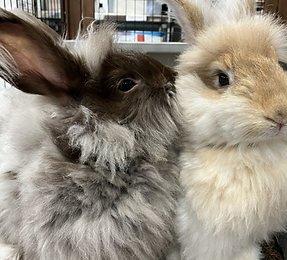
Peaches is one of our newest program animals. She arrived with her sister, Cocoa, in January 2024. Peaches is the leader of the two rabbits, bravely going up to strangers and always checking out what's happening at The Nature Connection or on programs. As Angora Rabbits, Peaches and Cocoa need to be groomed regularly. Their fur is often spun into wool and is considered a luxury fiber.

Albus
Corn Snake
Albus, a corn snake with stripes and orangey-brown coloring, lives in a tank at the front of our office. He mainly enjoys relaxing, though every once and a while when there's a lot of activity he'll poke his head up and watch what's going on around him. In the wild, corn snakes inhabit wooded groves, rocky hillsides, meadowlands, woodlots, rocky open areas, tropical hammocks, barns and abandoned buildings.
Interestingly, they are very secretive creatures, spending a lot of time underground. While Albus doesn’t go underground, he spends the majority of his time hiding away in the wooden, cave-like structure in his tank.

Cocoa
Angora Rabbit
Cocoa is Peaches' sister. They are both large, fluffy bunnies, but have very different personalities! Cocoa is much more aloof than Peaches. A little bit of a diva, Cocoa likes to watch her surroundings carefully and doesn't always want to be touched. With a little patience, Cocoa opens up and can be just as sweet as her sister. She enjoys chasing Peaches around their cage and eating lettuce, pineapple, hay, and other vegetables.

Sammy
Snail
Our snail, Sammy, lives with several snail friends in a tank in our office. In the wild, snails eat a variety of different foods. Terrestrial snails are usually herbivorous, however there are some species that are predatory carnivores or omnivores. The diet of most land snails can include leaves, soft bark, fruit, vegetables, and algae. While some species may damage plants, they are also kept as pets. As Nature Connection program participants will tell you: if you are very, very quiet, you can hear a snail munching on a leaf of lettuce.
FAQ
Can I volunteer with my dog?
Any dog that comes with us on a program must be a trained and certified Therapy Dog. The Nature Connection does not provide this training. And then you as the handler would go through our Nature Connection volunteer training process.
Contact us to learn more or with any questions!
